Electric Drive Assembly Testing: 2-Station System Solution
April 17, 2026
ASME BPVC Section VIII Division 1 for Canadian CRN Approval
April 17, 2026
Differential Pressure Decay Leak Testing: A Complete Guide for Canadian Manufacturers
When manufacturing pressure equipment for the Canadian market, leak detection isn’t just recommended—it’s required. For components operating at high pressures or handling critical fluids, differential pressure decay leak testing provides the accuracy and reliability regulators demand. At Titan Research Group, we help manufacturers understand which testing methods align with their compliance obligations and deliver the documentation needed for successful CRN registration.
What Is Differential Pressure Decay Testing?
Differential pressure decay testing is a non-destructive leak detection method that measures pressure changes between a test part and a reference volume. Unlike absolute pressure decay testing, which measures pressure loss in the test part alone, the differential method compares two volumes simultaneously. This approach eliminates many environmental variables that can compromise test accuracy.
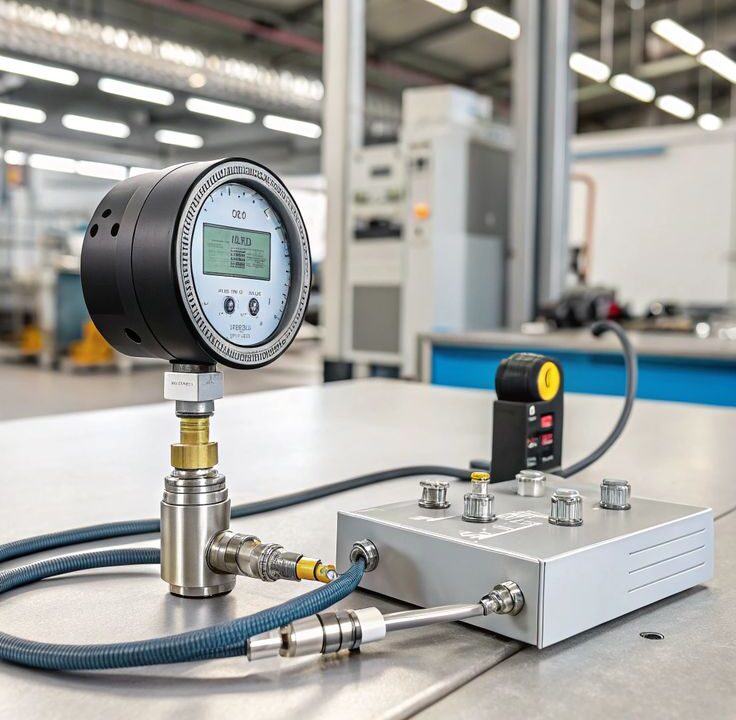
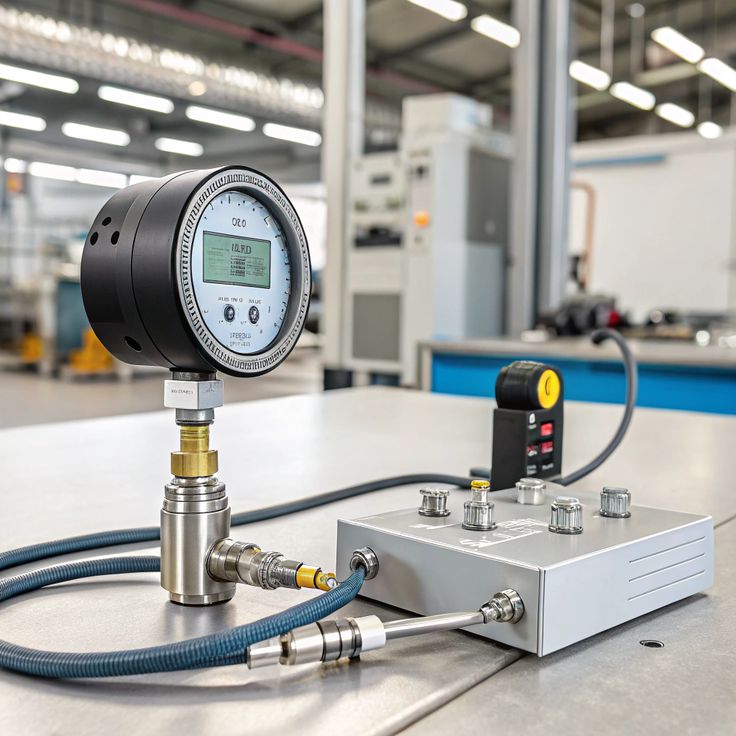
The test works by pressurizing both the component being tested and a sealed reference chamber to the same pressure. After allowing the pressure to stabilize, a differential pressure transducer monitors any variance between the two volumes. If the test part has a leak, pressure in that volume will drop relative to the reference, and the transducer will detect the difference.
This method is particularly valuable when testing equipment that must meet ASME Section VII requirements or other code-mandated standards where precise leak rate measurements are necessary for approval.
How Differential Pressure Decay Works in Practice
The testing process follows a controlled sequence designed to eliminate false readings and ensure repeatable results:
Preparation Phase – The test part and reference volume are connected to the test system and filled to the specified test pressure. This pressure is determined by the design specifications and applicable codes governing the equipment.
Stabilization Phase – Both volumes are isolated from the supply pressure and allowed to stabilize. This phase accounts for thermal effects caused by the compression of gas during pressurization. Temperature stabilization is critical because gas temperature changes can mimic pressure decay and lead to false failures.
Test Phase – Once stabilized, the differential transducer measures any pressure difference between the test part and reference volume over a predetermined test duration. The sensitivity of modern differential transducers can detect pressure changes as small as 0.000001 psi, making it possible to identify extremely small leaks.
Analysis and Reporting – At the end of the test, the measured differential pressure is compared against acceptance criteria. If the measured value falls within the target window, the part passes. If not, it’s rejected and investigated for leak sources.
For manufacturers seeking Canadian Registration Numbers, this documented testing process becomes part of the compliance package submitted to provincial authorities.
Why Choose Differential Over Absolute Pressure Decay?
Absolute pressure decay testing measures the pressure loss in a test part directly. While simpler in concept, it’s vulnerable to environmental influences that can skew results. Atmospheric pressure fluctuations, temperature changes in the test environment, and barometric shifts can all introduce noise into the measurement.
Differential pressure decay testing addresses these limitations by using a reference volume that experiences the same environmental conditions as the test part. When both volumes are exposed to identical external factors, those factors cancel out in the differential measurement. What remains is a clear signal showing only the pressure loss caused by actual leakage.
This advantage becomes critical when testing components that operate at high pressures or have very low allowable leak rates. In these scenarios, even minor environmental variations can mask or mimic leaks, leading to incorrect pass/fail decisions.
When Differential Pressure Decay Testing Is Required
Several conditions make differential pressure decay the preferred or required testing method:
High Test Pressures – Components tested above 30 psig benefit significantly from differential testing. Higher pressures amplify thermal effects during pressurization, which can cause temperature-induced pressure changes that absolute testing may misinterpret as leaks. Examples include fuel delivery systems, hydraulic components, and high-pressure piping assemblies.
Large Volume Components – When testing large assemblies like complete engines, transmissions, or vessel assemblies, the thermal mass of the part can cause extended stabilization periods. Differential testing with a similarly sized reference volume compensates for these thermal effects more effectively than absolute methods.
Very Small Leak Rates – Applications requiring leak rates below 3 sccm (standard cubic centimeters per minute) demand the enhanced sensitivity that differential testing provides. This includes sealed electronics, medical devices, and precision instrumentation where even minor leakage can compromise function or safety.
Short Cycle Time Requirements – In production environments, differential testing often allows for shorter test cycles while maintaining accuracy. Because environmental noise is eliminated, stabilization periods can be reduced, improving throughput without sacrificing quality.
For manufacturers working on hydrostatic testing programs or burst testing protocols, understanding when to incorporate differential pressure decay testing ensures comprehensive validation of pressure equipment.
Differential Testing for Sealed Devices and IP67 Compliance
Differential pressure decay testing also serves a different application: outside-in leak testing of sealed devices. For components like IIoT sensors, electronic enclosures, or sealed instruments that must meet IP67 standards or higher, traditional internal pressurization isn’t possible.
In these cases, the sealed device is placed in a test chamber that can be pressurized externally. A reference chamber containing a known-good sample is pressurized simultaneously. If the test device has a leak path, pressurized air will enter the sealed interior, causing a differential pressure reading compared to the intact reference unit.
This method requires careful attention to chamber design. The free air space around the test part must be minimized to ensure all potential leak paths are exposed to test pressure. Using an actual production part as the reference ensures the differential measurement reflects only the integrity difference between the two units.
Integration with CRN Certification and Code Compliance
Canadian pressure equipment regulations require manufacturers to demonstrate that their products meet safety standards before they can be sold or operated in Canada. This means obtaining a Canadian Registration Number (CRN) from the relevant provincial authority.
The CRN application process typically requires comprehensive testing documentation that proves equipment can withstand operating conditions safely. For piping systems, fittings, and pressure vessels, this often includes:
- Hydrostatic pressure testing to verify structural integrity at design pressure
- Leak testing to confirm containment of pressurized fluids or gases
- Non-destructive examination of welds and critical joints
- Material certifications proving code-compliant materials were used
Differential pressure decay testing addresses the leak testing requirement with documented precision. The method’s inherent accuracy and resistance to environmental variables make test results more defensible during regulatory review.
At Titan Research Group, we structure our pressure piping testing and vessel testing programs to generate the documentation provincial authorities expect. This includes detailed test procedures, calibration records, acceptance criteria, and as-tested results that demonstrate compliance with applicable codes.
Industry Applications Requiring Differential Pressure Decay Testing
Several industries depend on differential pressure decay testing to ensure product safety and regulatory compliance:
Oil and Gas – High-pressure fuel systems, hydraulic assemblies, and wellhead equipment require precise leak detection to prevent safety hazards and environmental contamination. Differential testing provides the sensitivity needed to detect micro-leaks before equipment enters service.
Pharmaceutical and Bioprocessing – Sterile processing equipment and cleanroom systems demand absolute containment integrity. Even small leaks can compromise product purity or create contamination risks. Manufacturers in these sectors often use differential testing to validate process piping and vessel seals meet ASME BPE requirements.
Automotive and Transportation – Fuel rails, brake systems, cooling circuits, and HVAC components in vehicles must be leak-free for safe operation. High-volume manufacturing environments benefit from the speed and accuracy of differential testing during production quality checks.
Water and Wastewater Treatment – Pumps, valves, and pressure vessels handling treated water or wastewater must maintain integrity to prevent contamination and meet environmental regulations. Differential testing verifies these components before installation.
Food and Beverage Processing – Sanitary piping systems and pressure vessels in food processing facilities require leak testing to ensure product safety and prevent contamination. The non-destructive nature of differential testing makes it ideal for validating equipment that must remain clean and intact.
Challenges and Considerations in Differential Pressure Decay Testing
While differential pressure decay testing offers significant advantages, successful implementation requires attention to several factors:
Reference Volume Selection – The reference volume must closely match the test part volume for optimal performance. Significant mismatches can reduce test sensitivity or extend required stabilization periods. In production settings, maintaining reference volumes that match product variations requires careful planning.
Thermal Stabilization – Even with differential compensation, rapid pressure changes create thermal effects that need time to stabilize. Test procedures must include sufficient stabilization time based on part size, material thermal properties, and test pressure. Rushing this phase leads to false failures and wasted time.
Seal and Connection Integrity – Test fixtures and connections must be leak-free and repeatable. Any leakage in the test setup itself will be measured as part failure. Regular calibration and fixture maintenance are essential for reliable results.
Transducer Calibration – Differential pressure transducers require periodic calibration to maintain accuracy. Calibration records become part of the quality documentation for CRN applications and must be traceable to national standards.
Environmental Control – While differential testing minimizes environmental effects, significant temperature swings or drafts in the test area can still impact results. Testing should occur in a controlled environment whenever possible.
How Titan Research Group Supports Pressure Equipment Testing
With over 20 years of experience in Canadian pressure equipment regulations, we understand both the technical and regulatory requirements manufacturers face. Our testing services are designed to generate audit-ready documentation that provincial authorities accept without delays or requests for additional information.
When manufacturers come to us for testing support, we start by reviewing the equipment design, applicable codes, and provincial requirements. This ensures the test program addresses all regulatory expectations from the beginning. For components requiring leak testing, we evaluate whether differential pressure decay is the appropriate method or if other techniques would be more suitable.
Our capabilities extend beyond leak testing to include comprehensive hydrostatic testing, burst testing, and non-destructive examination services. This integrated approach means manufacturers can complete their entire testing program with a single provider who understands how all the pieces fit together for CRN approval.
We also provide training on CRN processes and testing requirements, helping manufacturers build internal capability to manage compliance efficiently.
Documentation Requirements for Regulatory Acceptance
Test documentation quality often determines whether a CRN application succeeds or stalls in review. Provincial authorities expect clear evidence that testing followed appropriate standards and produced valid results. For differential pressure decay testing, this documentation typically includes:
- Written test procedures defining pressures, durations, acceptance criteria, and stabilization requirements
- Calibration certificates for test equipment and transducers traceable to national or international standards
- Test setup descriptions showing how the test part was fixtured and connected
- Reference volume specifications documenting the reference chamber characteristics
- As-tested data showing actual measured values, test dates, and operator identification
- Pass/fail determinations based on documented acceptance criteria
At Titan Research Group, we generate this documentation as a standard part of our testing services. Manufacturers receive complete test reports that can be submitted directly with CRN applications or archived as part of quality system records.
Comparing Differential Pressure Decay to Other Leak Testing Methods
Understanding when differential pressure decay is the right choice requires comparing it to alternative leak detection methods:
Absolute Pressure Decay – Simpler and less expensive, but vulnerable to environmental variables. Best suited for low-pressure applications or components tested in controlled environments with minimal thermal effects.
Mass Flow Leak Testing – Measures the actual flow rate of gas escaping from a pressurized part. Provides direct leak rate measurement but requires more complex equipment. Useful when precise leak rate quantification is required rather than simple pass/fail determination.
Helium Leak Testing – Uses helium gas and mass spectrometer detection to find extremely small leaks. Offers the highest sensitivity but at significant equipment cost. Reserved for applications where leak rates below 10⁻⁶ sccm must be detected, such as vacuum systems or aerospace components.
Bubble Testing – Immerses pressurized parts in water or applies soapy solution to detect leaks visually. Inexpensive and simple but subjective and difficult to document quantitatively. Not suitable for code compliance where measurable leak rates are specified.
For most pressure equipment requiring CRN certification, differential pressure decay offers the best balance of accuracy, cost, and regulatory acceptance.
Implementing Differential Pressure Decay in Production Environments
Manufacturers who need to leak test components during production face additional considerations beyond meeting code requirements. Test cycle time, throughput, and fixture changeover all impact production efficiency.
Automated differential pressure decay systems can test parts in as little as 10-30 seconds for many applications, making them suitable for high-volume production. Computer-controlled test stations can manage multiple test sequences, record data automatically, and interface with manufacturing execution systems to track tested parts.
For manufacturers ramping up production of pressure equipment, we can provide guidance on test equipment selection, fixture design, and procedure development that balances regulatory requirements with production realities.
Final Thoughts on Differential Pressure Decay Testing
Differential pressure decay leak testing represents a proven method for verifying pressure equipment integrity before it enters service. The technique’s ability to detect very small leaks while minimizing environmental interference makes it valuable for manufacturers pursuing Canadian Registration Numbers and other regulatory approvals.
Success with this method depends on understanding when it’s appropriate, implementing proper test procedures, and generating documentation that regulators accept. For manufacturers navigating Canadian pressure equipment regulations, working with experienced testing providers helps ensure compliance without unnecessary delays or rework.
If your organization manufactures pressure equipment and needs guidance on appropriate leak testing methods, test procedure development, or CRN application support, contact Titan Research Group. Our team can evaluate your specific requirements and recommend testing approaches that satisfy both technical and regulatory obligations.