Listed vs. Unlisted Components in ASME B31.3: What’s the Difference?
August 15, 2025
What Is Burst Testing and Why Is It Important for Your Products?
September 10, 2025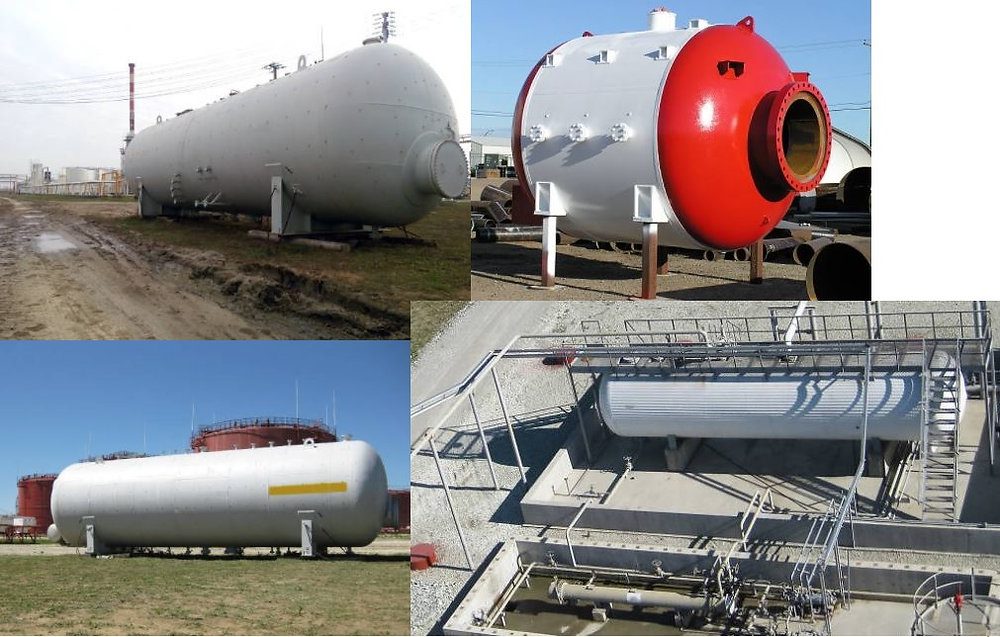
If you manufacture, import, or supply pressure equipment in Canada, a CRN (Canadian Registration Number) is the approval that lets your equipment legally enter the market. Without it, boilers, pressure vessels, fittings, and piping systems cannot legally be installed or operated above 15 psi, with some exemptions. The Canadian Registration Number confirms that a pressure-retaining design has been reviewed against Canadian codes before it ever reaches a job site.
But how do you actually obtain a CRN? This guide breaks down the CRN application process step-by-step, so you can navigate it efficiently and avoid costly delays. For the full breakdown of registration categories, required codes, and paperwork, see our CRN certification guide.
What a CRN Actually Is
A CRN is a registration number tied to a specific pressure-equipment design, not to a single physical unit. Once a design is registered, every item built to that exact design carries the same number. It tells an inspector, a buyer, or a safety authority that the design behind the equipment was checked against CSA B51 and the relevant ASME code before fabrication. If you want the full rationale behind the program, our explainer on why CRN is required in Canada covers what the system protects and how it developed.
The Different CRN Types
Knowing which category your equipment falls into determines the documentation you submit and how long the review takes. The common registration types are:
- Category A – Fittings: valves, flanges, gauges, expansion joints, and similar mass-produced components. These are often registered statistically (by family or type) rather than as one-offs.
- Category B – Pressure piping: piping systems registered to ASME B31.1 or B31.3, usually tied to a specific project or plant.
- Category C – Pressure vessels: tanks, heat exchangers, separators, and autoclaves built to ASME Section VIII.
- Category H – Boilers: fired and unfired boilers built to ASME Section I or IV.
A single product line can require more than one registration. A skid-mounted system, for example, may need separate numbers for the vessel, the piping, and any registered fittings that are not already covered by their own CRN.
CRN Process at a Glance
The six steps below are covered in detail further down this page. Use this as a quick reference, then jump to the section you need.
- Confirm scope. Check whether your vessel, boiler, piping run, or fitting actually needs a CRN.
- Build the design package. Calculations, drawings, material specs, and any required test data, sealed by a licensed P.Eng.
- Submit to the lead province. File with the safety authority where the equipment is first sold, installed, or fabricated.
- Extend to other provinces. Once the lead CRN is issued, apply for extensions in any other province or territory you sell into.
- Receive the CRN. Stamp or document the number on nameplates, drawings, and technical files.
- Maintain it. Track renewals, revisions, and audits so the registration doesn’t lapse.
Step 1: Determine if Your Equipment Requires a CRN
Before applying, confirm whether your product falls under Canadian pressure equipment regulations. A CRN is generally required for:
- Pressure vessels (tanks, heat exchangers, autoclaves, etc.)
- Boilers
- Fittings such as valves, flanges, couplings, and hoses
- Piping systems subject to ASME B31.3 or CSA B51
⚠️ Even small components like safety valves or connectors would need a CRN if they are part of a registered assembly.
Step 2: Prepare Design Documentation
Safety authorities require detailed documentation to demonstrate compliance with CSA B51 and applicable ASME codes(e.g., Section VIII, B31.3). Typical submission packages include:
- Design calculations (thickness, stress, UG-37 reinforcement, etc.)
- Material specifications (ASME or ASTM listed materials)
- Drawings and dimensions
- Proof test results (burst, hydrostatic, or cycle testing) for unlisted components
- Quality system certificates (such as ISO 9001)
The completeness of your documentation directly affects review timelines.
Step 3: Apply to a Provincial or Territorial Safety Authority
Canada does not have a single national CRN office. Instead, each province and territory issues CRNs through its own safety authority:
Your application is reviewed by professional engineers at the authority. They verify that your design complies with CSA B51 and relevant ASME standards.
Step 4: Multi-Provincial Registration (Optional but Common)
A CRN issued in one province can often be used to apply for registration in others. Some authorities coordinate through reciprocal agreements, but the process is not fully harmonized.
For manufacturers selling across Canada, multi-jurisdictional registration is essential. Services like ApprovalWise.com streamline this process, tracking expiry dates and simplifying submissions.
Step 5: Receive Your CRN Number
If your design passes review, you’ll receive a Canadian Registration Number. The number is unique and indicates the province of issuance.
For example:
- 0H12345.5 = A CRN issued in Ontario (H), with the digit at the end (.5) showing the province/territory extension.
Once issued, your CRN must be stamped or documented on all nameplates, drawings, and technical files (where it fits).
Step 6: Maintain Compliance
A CRN is not a one-time requirement. Safety authorities may require:
- Renewals after a set number of years (10 years for fittings)
- Revisions if pressure boundary design, materials, or manufacturing processes change
- Periodic audits or inspections to ensure ongoing compliance
Failure to maintain compliance can result in cancellation of the CRN.
Tips for a Smooth CRN Application
- Start early – review times can range from weeks to months to years
- Engage experienced engineers who understand CSA B51 and ASME codes such as Titan Research Group
- Use listed materials and components where possible, to reduce additional testing requirements, although unlisted materials and components are also acceptable with justification.
- Centralize your CRN records to avoid missed renewals or expired approvals using tools such as Approvalwise.com.
- Note that Canada exclusively regulates ASME and API code so don’t think that because you are certified in Europe you can sell to Canada (for example).
CRN Application Requirements at a Glance
Beyond the design package covered in Step 2, most safety authorities expect a few things to be in place before they will open a file:
- A licensed professional engineer to seal calculations. For statistically registered fittings this may be waived, but vessels and piping almost always need a P.Eng. stamp registered in the province of submission.
- A completed authority-specific form (AB-41 for ABSA, the TSSA design survey, and so on). Each authority uses its own paperwork.
- The applicable review fee, which can range from a few hundred dollars for a single fitting to several thousand for a complex vessel or multi-jurisdiction submission.
- Proof of code edition. Authorities review against the ASME and CSA editions currently adopted, so an outdated calculation set is a common reason for rejection. 2026 update: most provincial authorities have now moved to the newer CSA B51 and ASME Section VIII amendments adopted over the past two years, so double-check the edition your calculations reference before you submit.
CRN Application Costs in 2026
Every authority sets and updates its own fee schedule, so treat the figures below as planning ranges, not quotes, and confirm the current schedule with the province you’re submitting to. As a rough budget guide for 2026:
| Registration type | Typical review fee (CAD) | What drives the range |
|---|---|---|
| Category A fitting (statistical) | $150 – $500 | Number of sizes/ratings covered; new family versus renewal |
| Category B piping system | $500 – $2,500 | Line count, code (B31.1 vs. B31.3), and whether calculations need revision after a comment letter |
| Category C pressure vessel | $800 – $4,000+ | Vessel complexity, unlisted materials needing test data, first-of-a-kind designs |
| Category H boiler | $1,000 – $5,000+ | Fired vs. unfired, ASME Section I vs. IV, ancillary piping in the same submission |
| Additional province (extension) | $100 – $400 per province | Accepting an existing CRN usually costs less than a first review |
These figures cover the authority’s review fee only. Engineering time and P.Eng. sealing sit on top of that and vary by firm and scope, so budget for both the government fee and the design work behind the submission.
Common CRN Application Mistakes
Most rejected or delayed submissions fail for a handful of repeat reasons:
- Unlisted materials with no justification. Using a material not listed in the ASME code is allowed, but you must back it with mechanical test data. Skipping that step stalls the review.
- Mismatched drawings and calculations. Dimensions on the drawing that don’t agree with the stress report are one of the fastest ways to draw a comment letter.
- Applying in the wrong province first. Where you intend to install matters; registering in the wrong jurisdiction means redoing the survey elsewhere.
- Assuming foreign approval transfers. A CE mark or PED certificate carries no weight in Canada. The design has to be reviewed against ASME and CSA B51 from scratch.
- Forgetting fittings inside an assembly. A registered vessel can still be flagged if it contains an unregistered safety valve or connector.
Average Processing Times by Province (2026 data)
There is no national turnaround standard, so the same package can clear in weeks in one province and take months in another. The ranges below are planning estimates for a complete, standard submission; first-of-a-kind designs and files that draw a comment letter take longer everywhere.
| Province / territory | Safety authority | Typical review time |
|---|---|---|
| Alberta | ABSA | 3–6 weeks; runs a high volume of files and is often the fastest for straightforward designs, though queues fluctuate |
| Ontario | TSSA | 4–8 weeks; standard fittings and vessels typically move faster than first-of-a-kind designs |
| British Columbia | Technical Safety BC | 4–8 weeks, depending on current backlog |
| Quebec | RBQ | 6–10 weeks; French-language documentation and added provincial rules can extend the timeline |
| Saskatchewan | TSASK | Around 6 weeks for a standard design review; expedited options are available |
| Manitoba | Provincial safety authority | 6–10 weeks for a complete submission |
| Nova Scotia | Provincial safety authority | 6–10 weeks for a complete submission |
| New Brunswick | Provincial safety authority | 6–10 weeks for a complete submission |
| Newfoundland and Labrador | Provincial safety authority | 6–10 weeks for a complete submission |
| Prince Edward Island | Provincial safety authority | 8–12 weeks; lower submission volume can mean a longer queue |
| Yukon | Territorial safety authority | 8–12 weeks for a complete submission |
| Northwest Territories | Territorial safety authority | 8–12 weeks for a complete submission |
| Nunavut | Territorial safety authority | 8–12 weeks; lowest submission volume of any jurisdiction, so build in extra lead time |
A complete, internally consistent package is the single biggest factor in a fast approval. Incomplete files restart the clock each time a comment letter is issued. None of the smaller provinces and territories publish a dedicated CRN phone line; submissions go through the province’s general technical safety or boiler-and-pressure-vessel program, so if you’re not sure which office to file with, our expert CRN help team can confirm the right contact before you submit.
Provincial Differences in CRN Requirements
Although every authority works from CSA B51 and the same ASME codes, the details differ enough that a CRN is never automatically valid everywhere. Provincial differences show up in a few practical ways:
- Registration prefixes. Each province has its own identifying letter (for example, the H suffix family marks an Ontario registration), so a number openly signals where it was issued.
- Acceptance of out-of-province numbers. Many authorities accept a CRN registered elsewhere and add their own extension digit, but a few require their own review. Selling nationally usually means registering in several jurisdictions.
- Language and local rules. Quebec’s RBQ adds requirements that the western provinces do not, and territories often defer to a neighbouring province’s authority.
- Fee schedules and forms. No two authorities charge identically or use the same submission form, so budget and paperwork change with each province.
Renewal and Ongoing Compliance
Some registrations carry an expiry. Fitting CRNs commonly need renewal on a ten-year cycle, while vessel and piping registrations stay valid as long as the design does not change. Any change to the pressure boundary, materials, or manufacturing method usually triggers a revision, which means a fresh submission. Letting a fitting registration lapse can quietly remove a product from the market, so tracking expiry dates across every province you sell into is part of staying compliant, not an afterthought.
Final Thoughts
Obtaining a CRN in Canada can be a complex process, but it’s essential for legal compliance, market access, and public safety. By following a structured approach—identifying requirements, preparing complete documentation, and applying through the right authorities—you can avoid costly delays and ensure your pressure equipment is accepted across Canada.
For organizations managing multiple products and jurisdictions, tools like Approval Wise provide a powerful way to track, manage, and streamline CRN approvals.