
What Is CRN and Why Is It Important for Pressure Piping in Canada?
July 18, 2025
Listed vs. Unlisted Components in ASME B31.3: What’s the Difference?
August 15, 2025
When supplying or installing pressure equipment in Canada, one requirement comes up repeatedly: CRN certification. The certificate is tied to a Canadian Registration Number, the unique identifier issued once a design is reviewed and accepted. For many manufacturers and end-users, CRN certification can look like a regulatory hurdle, but it exists for one important reason: safety.
This article focuses on the reasoning behind that requirement: the safety, legal, and market-access stakes that make CRN certification non-negotiable for anyone selling, installing, or operating pressure equipment in Canada. For the full registration process from start to finish, see our complete CRN certification guide. If you’re ready to start an application, our step-by-step guide walks through each stage.
What Is CRN Certification?
CRN certification is the formal acceptance of a pressure equipment design by a provincial or territorial safety authority. Once a design passes review, the authority issues a Canadian Registration Number, a unique identifier that proves the design has been registered.
In other words, the Canadian Registration Number is the output of certification, and the certificate confirms the design complies with CSA B51 – Boiler, Pressure Vessel, and Pressure Piping Code and applicable ASME codes such as Section VIII or B31.3.
Each province and territory enforces its own pressure equipment regulations, so CRN certification confirms the design has been reviewed and accepted by a recognized safety authority (for example, ABSA in Alberta, TSSA in Ontario, or TSBC in British Columbia).
Why Is CRN Certification Required in Canada?
1. Public Safety
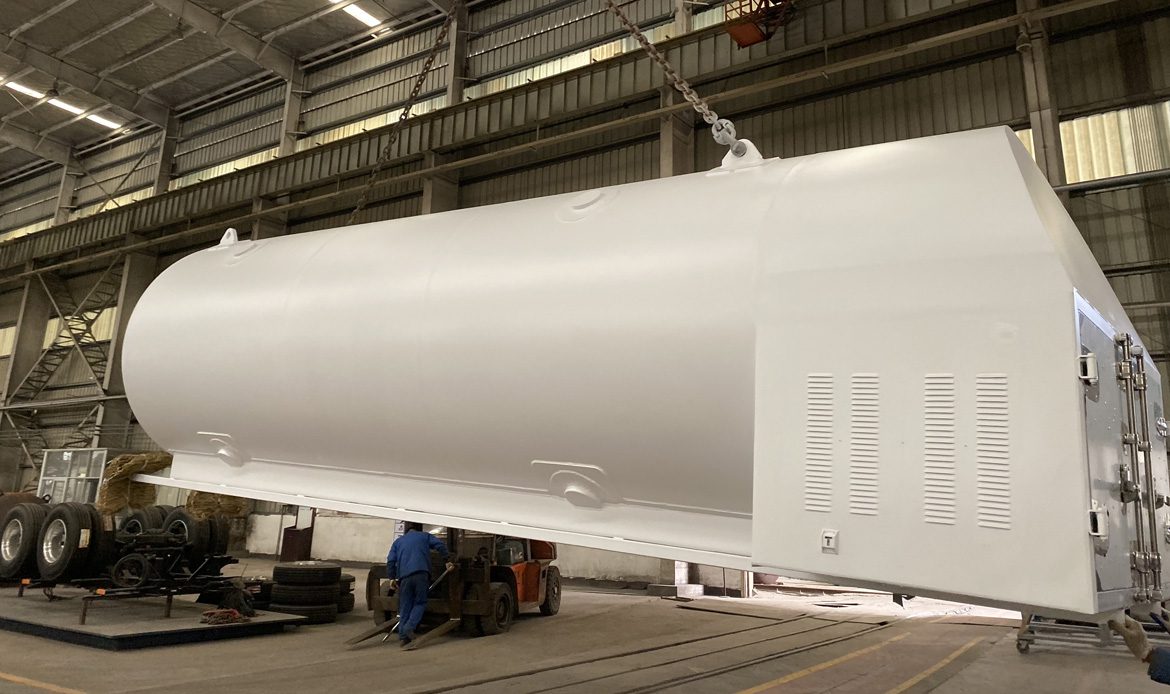
Pressure equipment operates under high stress. Improperly designed or manufactured vessels, valves, or fittings can fail catastrophically.
The CRN certification review verifies that designs meet rigorous engineering and material standards, reducing the risk of accidents, explosions, or leaks. A pressure vessel failure is not a hypothetical: a rupture releases stored energy instantly, and the CSA B51 review process exists specifically to catch undersized welds, unsuitable materials, and design flaws before equipment ever reaches a job site.
2. Regulatory Compliance
In Canada, pressure equipment cannot legally be sold, installed, or operated without CRN certification.
Provincial and territorial safety authorities enforce these rules, and non-compliance can result in:
- Fines and penalties
- Equipment being seized or shut down
- Liability for damages in the event of failure
Beyond fines and seizure, operating uncertified equipment can void insurance coverage. It can also expose the manufacturer, installer, and owner to personal liability if the equipment causes injury or property damage.
3. National Consistency
The CRN certification framework is consistent nation-wide. A fitting registered in one province can often be accepted in others, easing inter-provincial trade while keeping compliance intact everywhere. This matters most for manufacturers who sell across provincial lines: without a recognized CRN, every shipment risks a delay at the point of installation while the receiving province’s authority reviews the design from scratch.
4. Market Access
Without CRN certification, equipment suppliers risk losing access to the Canadian market.
For international manufacturers, CRN certification is more than a regulatory checkbox; it is a competitive advantage, opening the door to major industries such as oil & gas, petrochemical, pharmaceutical, and power generation. This is especially true where non-compliance carries outsized consequences, from an oil & gas facility where a leak can trigger a shutdown order, to a pharmaceutical plant where uncertified process equipment can delay a product launch by months.
CRN Certification Benefits by Industry
The reasons CRN certification matters shift depending on what an operator is running. Here is how it plays out across the sectors Titan Research Group works in most:
Oil & Gas
CRN certification lets manufacturers supply the pressure vessels, piping, and fittings that upstream and midstream operators require before equipment goes on a wellsite or processing facility. Regulators such as the AER in Alberta reference CRN status directly during facility inspections.
Petrochemical
Petrochemical plants run vessels at extreme pressures and temperatures, so provincial authorities treat CRN review as a baseline safety gate. Certified equipment reduces commissioning delays because inspectors can verify compliance from the CRN number instead of re-reviewing full design packages on site.
Pharmaceutical & Biotech
Process skids and pressure vessels used in pharmaceutical manufacturing must satisfy CRN registration alongside cGMP documentation. Getting the CRN early avoids a validated production line sitting idle while a design registration is still in review.
Power Generation
Boilers and heat recovery steam generators are among the highest-consequence pressure equipment in the country, which is why their CRN review is typically more detailed. Utilities use the CRN as their default proof of design compliance during commissioning. For how CSA B51 applies specifically to boilers, see our boilers and pressure vessels guide.
Biogas & Renewable Energy
Digesters, scrubbers, and biogas piping systems increasingly fall under the same CRN framework as conventional pressure equipment, and provincial authorities are applying it more consistently to the sector. Suppliers new to biogas often underestimate this step, which delays project timelines by weeks.
Food, Beverage & Water Treatment
Boilers, retort systems, and clean-in-place skids in food and beverage plants fall under the same pressure equipment rules as heavy industry. CRN certification confirms the equipment meets CSA B51 even though it is handling consumable products or water rather than hydrocarbons.
What Equipment Requires CRN Certification?
CRN certification is typically required for:
- Pressure vessels (tanks, heat exchangers, autoclaves)
- Boilers
- Fittings such as valves, flanges, couplings, hoses, and expansion joints
- Piping systems covered under B31.3 or CSA B51
Even small components like pressure relief valves or braided hoses may require CRN certification if they are part of a registered assembly.
How CRN Certification Relates to the Canadian Registration Number
People often use the two terms interchangeably, but they describe different things. CRN certification is the process and the proof of compliance; the Canadian Registration Number is the identifier you receive once that certification is granted.
The number itself carries information. Its format shows the province of issuance and the type of registration, so a registration starting with “0” was issued in Ontario, while other leading digits map to other provinces. That code is what inspectors, buyers, and authorities check to confirm a design holds valid certification.
Compliance and Regulatory Considerations
CRN certification is not a one-time stamp. Fittings generally need renewal after a set period, and any change to the pressure boundary, materials, or manufacturing method usually requires a revision or re-registration. Operating modified equipment under an outdated certificate can void compliance.
Because each authority sets its own rules, the certification accepted in Ontario may carry conditions in Alberta or Quebec. Keeping documentation, design calculations, and material records audit-ready is what keeps CRN certification Canada defensible if an inspector asks.
Final Thoughts
CRN certification is required in Canada to protect people, property, and the environment. It confirms that pressure equipment is designed, manufactured, and installed to meet strict codes and standards, and it is what gives Canadian customers confidence and trust in equipment before it is ever installed. To see which sectors rely on it most, explore the industries we serve with CRN registration.
For manufacturers and importers, CRN certification support is about more than regulatory compliance; it is about earning trust, ensuring safety, and gaining access to one of the world’s most demanding markets.