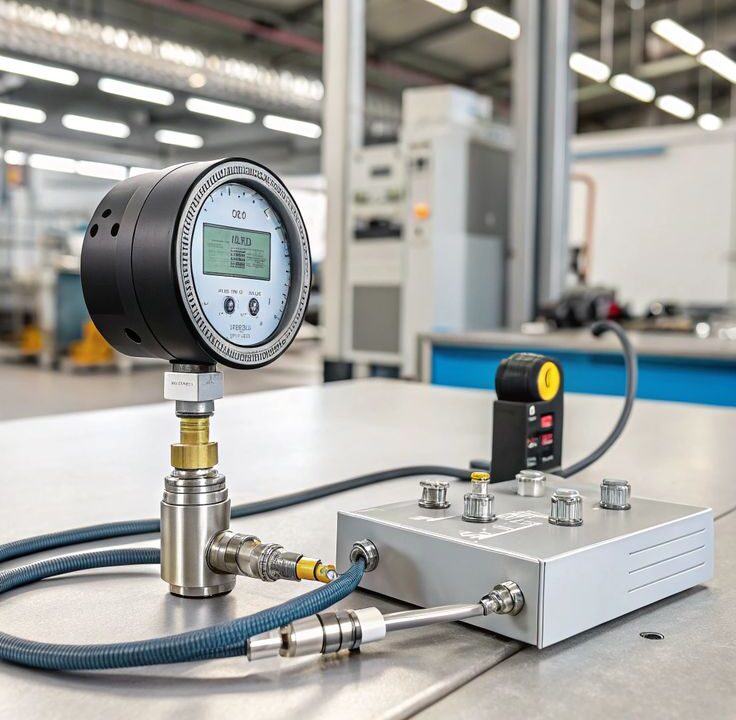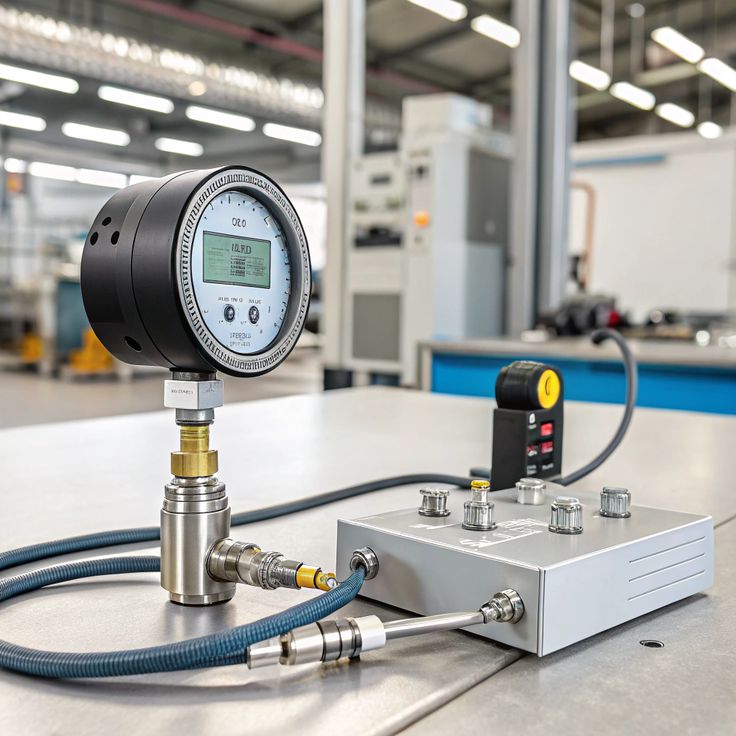

Hydrostatic Pressure Test vs. Pneumatic Pressure Testing
April 22, 2026
Types of Stresses in Piping: Sustained, Expansion & More
April 22, 2026
Pipe Flow Calculations vs. CFD Simulations: Which Method Supports Pressure Equipment Compliance?
Pipe flow calculations use one-dimensional models to determine pressure losses, flow rates, and velocities across entire piping networks. CFD (Computational Fluid Dynamics) simulations provide detailed three-dimensional analysis of flow behavior inside individual components like vessels, valves, and fittings. For Canadian pressure equipment compliance and CRN registration, both methods play distinct but complementary roles in validating designs against ASME and CSA codes.
Designing pressure equipment that meets Canadian regulatory requirements isn’t something you can approach with guesswork. Whether you’re building a pressure vessel for oil and gas service or engineering a pharmaceutical piping loop, the difference between a compliant design and a rejected CRN application often comes down to the quality of your engineering analysis.
Two tools sit at the center of modern pressure equipment design: pipe flow calculations and CFD simulations. They’re frequently mentioned together, but they serve very different purposes. Understanding when to use each one can save weeks of redesign, reduce testing costs, and strengthen your path to Canadian Registration Number (CRN) approval.
This guide breaks down both methods, explains their role in pressure equipment compliance, and shows you how to apply them effectively within the Canadian regulatory framework.
What Are Pipe Flow Calculations?
Pipe flow calculations are one-dimensional engineering models used to predict how fluids behave as they move through piping systems. These calculations rely on well-established equations, including the Darcy-Weisbach equation, Bernoulli’s principle, and Moody chart friction factors, to produce reliable data for system-level design decisions.
What Pipe Flow Calculations Tell You
- Pressure losses across pipe lengths, elbows, tees, and reducers
- Flow rates and velocities throughout the distribution network
- Temperature changes due to heat transfer or fluid mixing
- Pump sizing requirements for adequate flow delivery
- Pressure regulator and valve configurations for balanced operation
- Loop balancing data for multi-branch systems
These calculations work best when you need a full-system view of how pressure and flow distribute through an interconnected piping network. They’re fast, cost-effective, and well suited to verifying that your system meets the operating parameters required for pressure piping compliance.
Common Applications for Pressure Equipment
In the context of Canadian pressure equipment, pipe flow calculations are typically applied to:
- Purified water (PW) and water-for-injection (WFI) distribution loops in pharmaceutical plants
- Clean steam generation and distribution systems
- Compressed air and gas networks in manufacturing facilities
- Process piping systems governed by ASME B31.3 (Process Piping)
- Heating and cooling utility loops for boilers and pressure vessels
Important Limitation
Pipe flow calculations model flow as a one-dimensional average across each pipe section. They do not capture localized 3D flow phenomena such as vortices, dead zones, or uneven mixing inside components. When local flow behavior affects safety or performance, CFD simulation becomes necessary.
What Are CFD Simulations?
CFD (Computational Fluid Dynamics) simulations solve the full Navier-Stokes equations in three dimensions, creating a detailed picture of how fluid moves within a specific geometry. Instead of treating flow as a single value at each pipe section, CFD divides the entire fluid domain into millions of small cells and calculates velocity, pressure, temperature, and concentration at every point.
What CFD Simulations Reveal
- Velocity and pressure fields throughout a vessel, fitting, or complex component
- Temperature distribution across surfaces and through the fluid volume
- Concentration gradients for mixing analysis and product homogeneity
- Turbulence patterns that affect heat transfer and corrosion rates
- Stagnation zones that may harbor contamination in sanitary applications
- kLa (mass transfer coefficient) values for bioreactor and fermentation design
CFD is the tool of choice when you need to understand what happens inside a component, not just across a system. It’s particularly valuable for validating the performance of pressure vessels, custom fittings, and mixing equipment before you commit to manufacturing.
Common Applications in Pressure Equipment Design
- Mixing tank and bioreactor flow optimization
- Pressure vessel internal baffle and nozzle design
- Heat exchanger thermal performance verification
- Filling needle and dispensing component flow analysis
- Sterilization-in-place (SIP) and clean-in-place (CIP) coverage analysis
- Custom fitting validation for ASME BPE code engineering projects
Typical CFD Deliverables
A professional CFD analysis package usually includes:
- Color-mapped velocity, pressure, and temperature visualizations
- Quantitative performance graphs and data tables
- Mesh quality and convergence documentation
- Engineering recommendations based on simulation results
- Supporting documentation suitable for regulatory submissions
Pipe Flow Calculations vs. CFD: Side-by-Side Comparison
Choosing the right method depends on what you’re trying to solve. Here’s a direct comparison:
| Criteria | Pipe Flow Calculations | CFD Simulations |
|---|---|---|
| Analysis Type | 1D system-level | 3D component-level |
| Best For | Piping networks, pump sizing, loop balancing | Vessels, fittings, mixing, thermal analysis |
| Speed | Hours to days | Days to weeks |
| Cost | Lower | Higher |
| Detail Level | Average values per section | Full field data at every point |
| Detects Local Phenomena | No | Yes (vortices, dead zones, gradients) |
| ASME Code Support | B31.3, B31.1, pipe sizing | Section VIII, BPE, component validation |
| Regulatory Use | System compliance documentation | Design justification and optimization |
Why Both Methods Matter for Canadian Pressure Equipment Compliance
Canadian provinces require a CRN (Canadian Registration Number) for pressure equipment operating above 15 psi. The CRN submission package must demonstrate that a design conforms to accepted codes such as ASME Section VIII for vessels, ASME B31.3 for process piping, and CSA B51 as the overarching Canadian standard.
Engineering calculations form a critical part of that submission. Provincial authorities, including ABSA in Alberta, TSSA in Ontario, and RBQ in Quebec, review design calculations to verify code compliance. Submitting incomplete or insufficiently rigorous analysis is one of the most common reasons for CRN delays.
How Pipe Flow Calculations Support CRN Applications
For pressure piping systems, pipe flow calculations provide the engineering basis needed to demonstrate:
- Operating pressures stay within design limits throughout the system
- Flow velocities meet code requirements and avoid erosion concerns
- Pressure drops are accounted for and safety margins are maintained
- Pipe sizes, wall thicknesses, and materials are correctly specified per ASME B31.3
How CFD Simulations Strengthen Design Submissions
For complex vessels and components, CFD analysis provides additional evidence that a design performs as intended. This is especially relevant when:
- Standard hand calculations don’t adequately address the geometry
- Internal flow patterns affect thermal stress or fatigue life
- Mixing performance must be verified for process validation
- Custom nozzle, baffle, or impeller configurations need justification
While CFD results alone won’t satisfy CRN requirements (physical testing such as burst testing or hydrostatic testing is still mandatory), they strengthen the overall submission and reduce the risk of redesign after testing.
Understanding Non-Linear Behavior in Pressure Systems
One of the most costly mistakes in pressure equipment design is assuming that system behavior scales proportionally. It often doesn’t.
Consider this: reducing a pipe diameter by 20% doesn’t produce a 20% increase in pressure drop. Depending on the flow regime and Reynolds number, that same reduction could double or triple the pressure loss. This non-linear relationship between geometry and fluid behavior is what makes engineering calculations essential rather than optional.
Where Non-Linear Effects Create Problems
- Piping reductions and expansions: Small geometric changes produce outsized pressure and velocity shifts
- Mixing vessels: Doubling impeller speed doesn’t double mixing uniformity. The relationship between agitation and homogeneity is highly non-linear
- Heat exchangers: Fouling, flow maldistribution, and turbulence create conditions that simple linear models miss entirely
- Multiphase flow: Gas-liquid mixtures in piping behave unpredictably without detailed analysis
This is precisely why provincial regulators expect calculation packages that account for real operating conditions, not simplified assumptions. And it’s why the combination of pipe flow calculations (for system-level validation) and CFD (for component-level verification) produces the most defensible compliance documentation.
When to Use Pipe Flow Calculations, CFD, or Both
Choosing the right analysis method depends on the engineering challenge you’re solving. Here’s a practical decision guide:
| Engineering Need | Recommended Method | Reasoning |
|---|---|---|
| Utility piping distribution design | Pipe Flow Calculations | System-level pressure and flow balancing across the network |
| Pump selection and pressure regulator sizing | Pipe Flow Calculations | Requires accurate system pressure curves |
| Worst-case operating scenario verification | Pipe Flow Calculations | Models multiple operating conditions rapidly |
| Mixing tank or bioreactor performance | CFD Simulation | 3D flow patterns govern mixing quality |
| Custom component or fitting validation | CFD Simulation | Geometry-specific analysis not possible in 1D |
| Pressure vessel nozzle load analysis | CFD + FEA | Combined thermal and structural assessment needed |
| Complete CRN submission for a piping system | Both | System calculations plus component justification |
| Process piping with complex branch connections | Both | Pipe flow for network, CFD for junction behavior |
How Engineering Analysis Supports the CRN Approval Process
Obtaining a CRN in Canada requires more than just filling out forms. Each submission must include engineering documentation that proves a design meets the applicable safety codes. Here’s how pipe flow calculations and CFD simulations fit into that process:
Design Review and Code Identification
Determine which codes apply (ASME Section VIII for vessels, ASME B31.3 for piping, CSA B51 for Canadian registration) and identify the engineering analysis required for the submission.
System-Level Analysis with Pipe Flow Calculations
Calculate pressure drops, flow distribution, and operating conditions across the piping network. Verify pipe sizing, wall thicknesses, and material selections meet code minimums with appropriate safety margins.
Component-Level Analysis with CFD (Where Required)
For complex geometries, custom components, or designs that fall outside standard calculation methods, perform CFD simulations to validate internal flow behavior, thermal performance, and mixing effectiveness.
Physical Testing and Validation
Conduct required physical tests including hydrostatic pressure testing and, when necessary, burst testing to confirm the design performs safely under pressure.
Documentation and CRN Submission
Compile all calculations, simulation reports, test results, drawings, and material certifications into a complete submission package for the relevant provincial authority.
Each step builds on the previous one. Skipping the analysis phase or submitting calculations that don’t fully address the design creates delays, revision requests, and added cost. That’s why experienced CRN services providers invest heavily in getting the engineering right before the submission goes in.
Reducing Cost and Risk Through Predictive Engineering
Every pressure equipment project has a budget and a timeline. Rework caused by design errors, failed tests, or rejected submissions adds to both. Pipe flow calculations and CFD simulations are predictive tools that catch problems during the design phase, when changes are inexpensive, rather than during manufacturing or commissioning, when they’re costly.
What Predictive Engineering Prevents
- Failed hydrostatic or burst tests: Calculations that don’t account for real operating conditions lead to undersized designs that fail during testing. Each failed test means rework, retesting, and lost time.
- CRN submission rejections: Incomplete or inaccurate calculation packages are a top reason for provincial authority rejection. Resubmission cycles can add months to a project.
- Oversized components: Without proper analysis, engineers often add excessive safety margins, resulting in heavier, more expensive equipment that’s harder to install and maintain.
- Production delays: Designs that pass analysis but fail in real-world conditions create downstream problems during commissioning and validation.
The investment in thorough engineering analysis pays for itself many times over through fewer test failures, faster CRN approvals, and equipment that performs correctly from day one.
Industries Where Pipe Flow and CFD Analysis Are Critical
These engineering methods aren’t limited to one sector. Across industries that require CRN registration, pipe flow calculations and CFD simulations solve distinct design challenges:
- Oil and Gas: Process piping systems operating at extreme pressures and temperatures require comprehensive flow and thermal analysis per ASME B31.3
- Pharmaceutical and Biotech: Sanitary piping loops, mixing vessels, and bioreactors demand both system-level flow analysis and CFD-verified cleanability and mixing performance
- Food and Beverage: CIP system design, heat exchanger validation, and tank mixing all benefit from combined calculation and simulation approaches
- Power Generation: Boiler feedwater systems, steam distribution networks, and condenser piping require thorough flow analysis for safe and efficient operation
- Water and Wastewater: Chemical dosing systems, filtration piping, and distribution networks rely on accurate pipe flow calculations for proper design
- Biogas and Energy: Gas collection piping, digester mixing, and pressurized storage systems combine piping analysis with vessel-level CFD requirements
Common Mistakes That Delay CRN Approval
After years of supporting CRN registration for pressure equipment manufacturers, patterns emerge in what causes delays. Several relate directly to engineering analysis quality:
- Submitting calculations that don’t match the drawings. If your pipe sizes, materials, or operating conditions in the calculation package differ from what’s shown on the design drawings, the submission will be returned for correction.
- Using the wrong code or edition. Provincial authorities specify which code editions are accepted. Calculations based on outdated or incorrect code references get rejected.
- Ignoring worst-case operating conditions. Calculations must address maximum operating pressures and temperatures, not just normal operating conditions. Failing to analyze upset scenarios creates compliance gaps.
- Skipping component-level analysis for complex designs. If a design includes custom fittings, non-standard nozzle configurations, or internal components that affect flow, simple pipe flow calculations may not be sufficient. CFD or finite element analysis may be needed.
- Incomplete documentation. Every assumption, input value, and calculation result must be clearly documented. Provincial reviewers need to follow your engineering logic from start to finish.
Avoiding these mistakes starts with understanding which analysis tools your design requires and ensuring the engineering team has the expertise to apply them correctly.
Frequently Asked Questions
What is a CRN in Canada?
A Canadian Registration Number (CRN) is a unique identifier assigned to pressure equipment designs that confirms compliance with Canadian safety codes, including CSA B51 and applicable ASME standards. Every pressure vessel, boiler, piping system, and fitting operating above 15 psi must hold a valid CRN before it can be legally manufactured, sold, or installed in a Canadian province or territory. Learn more about CRN registration services.
How long does CRN approval take?
CRN approval timelines vary based on equipment complexity, documentation completeness, and the reviewing provincial authority. Simple designs with thorough submissions may be approved in 4 to 8 weeks. Complex vessels or multi-province registrations can take 3 to 6 months. Working with an experienced CRN services provider who understands each province’s requirements helps avoid delays caused by incomplete submissions or calculation errors.
When is burst testing required for pressure equipment?
Burst testing is required when a design needs destructive validation to confirm its maximum failure pressure. This includes situations where regulatory authorities request proof of design margins, when prototype designs lack sufficient analytical data, or when the CRN registration process requires physical test evidence to supplement engineering calculations. It’s also common for manufacturers establishing the burst-to-design pressure ratio for new product lines.
What codes apply to pressure vessels in Canada?
Pressure vessels in Canada must comply with CSA B51 (Boiler, Pressure Vessel, and Pressure Piping Code) and are typically designed to ASME Boiler and Pressure Vessel Code Section VIII. Piping systems follow ASME B31.3 (Process Piping) or other applicable B31 codes. Provincial regulators such as ABSA (Alberta), TSSA (Ontario), and RBQ (Quebec) enforce these standards. Code engineering services help ensure your design meets the correct requirements.
Can CFD simulations replace physical pressure testing for CRN approval?
No. CFD simulations are valuable design optimization and validation tools, but they cannot replace the physical pressure testing required for CRN approval. Provincial regulators require actual test results, including hydrostatic testing and, in some cases, burst testing, as part of the compliance package. CFD and pipe flow calculations supplement physical testing by helping engineers optimize designs before manufacturing, reducing the likelihood of test failures.
Start Your Pressure Equipment Compliance Process
From engineering calculations to CRN submissions, Titan Research Group provides end-to-end support for pressure equipment compliance across every Canadian province. Get expert guidance from engineers who understand the codes, the regulators, and the fastest path to approval.