Control Temperature for Better Mass Flow Pressure Decay Tests
April 17, 2026
Electric Drive Assembly Testing: 2-Station System Solution
April 17, 2026
Differential Pressure Decay Testing for CRN Compliance in Canada
When you’re manufacturing pressure equipment for the Canadian market, testing isn’t just about passing inspection—it’s about proving your product can handle real-world conditions safely. Differential pressure decay testing offers manufacturers a precise, efficient method to detect leaks and validate integrity before equipment enters service.
At Titan Research Group, we help manufacturers navigate the technical and regulatory requirements for CRN compliance, including sophisticated testing methods that demonstrate code conformance and equipment reliability.
What Is Differential Pressure Decay Testing?
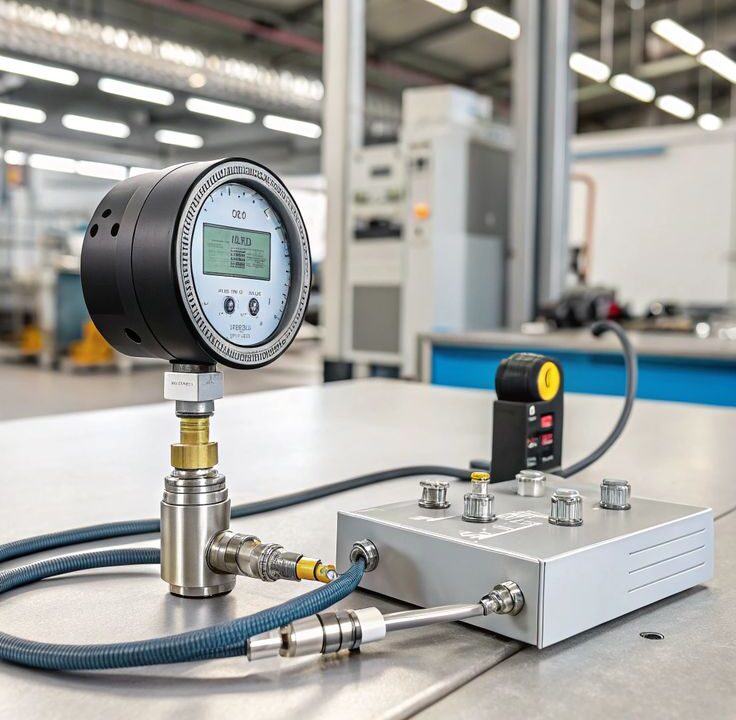
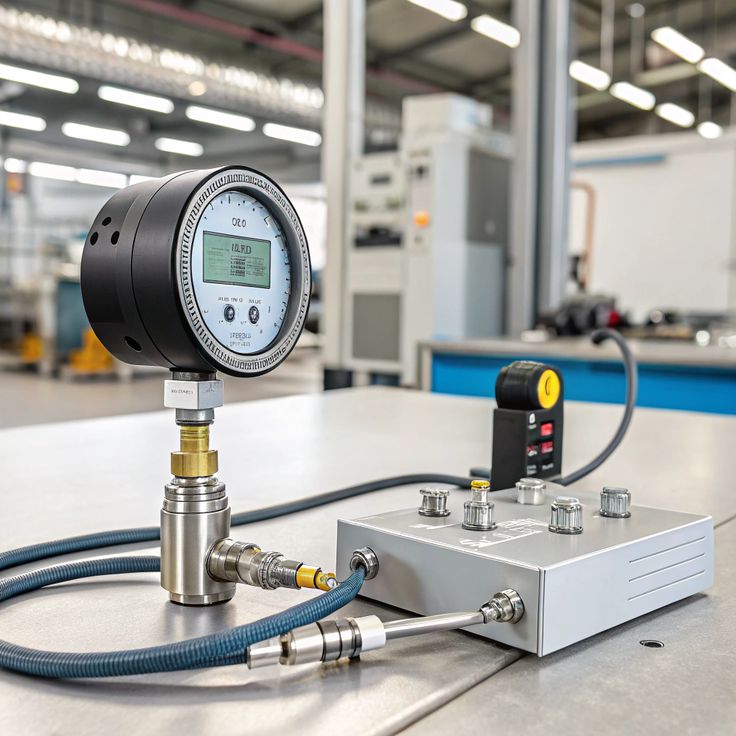
Differential pressure decay testing measures leak rates by comparing pressure changes between a test part and a reference volume. Unlike absolute pressure decay methods that measure pressure changes in a single test part, differential pressure testing uses a differential pressure transducer to monitor the pressure difference between two volumes simultaneously.
This approach offers improved resolution and faster cycle times, particularly when testing at higher pressures (above 30 psig) or detecting smaller leak rates (below 1 sccm). For manufacturers seeking CRN certification in Canada, this method provides the precision needed to demonstrate compliance with ASME and CSA standards.
Why Differential Pressure Testing Matters for Canadian Manufacturers
Canadian regulations require pressure equipment to meet specific safety standards before receiving a Canadian Registration Number. The testing phase is where manufacturers prove their designs can withstand operating conditions with appropriate safety margins.
Differential pressure decay testing complements other verification methods like hydrostatic testing and burst testing by providing detailed leak detection data. While hydrostatic tests verify structural integrity under pressure and burst tests identify failure points, differential pressure decay testing confirms that assemblies maintain pressure integrity—a critical requirement for vessels, piping systems, and fittings across multiple industries.
Key Variables That Affect Test Accuracy
Setting up an accurate differential pressure decay test requires careful attention to several variables that can influence results:
Test Pressure Considerations
The test pressure you select depends on your equipment’s design specifications and the applicable code requirements. For ASME Section VII compliance, specific test pressures and hold times are mandated based on equipment type and operating conditions.
Part design and volume also impact the appropriate test pressure. Smaller components may require different pressure levels than large vessels to achieve meaningful leak detection within reasonable cycle times.
Part Volume and Design Factors
Large volume parts present unique challenges in differential pressure testing:
- Volume variances between production units can affect baseline measurements
- Part elasticity causes dimensional changes under pressure
- Internal component movement during pressurization
- Porous materials (like cast housings) absorb pressurized gas at different rates
- Complex geometries create uneven pressure distribution
These factors must be accounted for during test setup to ensure measurements reflect actual leakage rather than material behavior.
Temperature Effects
Temperature dramatically impacts pressure measurements. Three temperature-related factors require management:
Adiabatic heating: Compressing gas generates heat, temporarily raising pressure. Insufficient stabilization time will produce false readings.
Ambient temperature fluctuations: Room temperature changes during testing can mask or exaggerate actual leak rates.
Part temperature: Components coming from welding, washing, or other processes carry residual heat that affects test accuracy.
Temperature control becomes especially critical for manufacturers working with pressure vessels and boilers that operate across wide temperature ranges.
Setting Up Your Differential Pressure Decay Test
Proper test setup requires a systematic approach that isolates variables and establishes reliable baselines.
Phase 1: Fill Cycle
Bring the test part to the specified pressure over sufficient time. For porous materials or flexible components, extend fill time to allow pressure to stabilize within the material structure. Rushing this phase introduces errors that compromise the entire test.
Phase 2: Stabilization Time
This phase allows compressed gas to dissipate thermal energy and part materials to reach equilibrium. The stabilization period should be long enough to eliminate adiabatic heating effects and account for material expansion or absorption.
Many manufacturers underestimate stabilization requirements, leading to false rejection of acceptable parts or, worse, accepting defective ones.
Phase 3: Isolation Sequence
Here’s where differential pressure decay differs from absolute pressure testing. After system stabilization, you isolate the test part from the reference volume. This isolation doesn’t necessarily add to overall cycle time—you can split your stabilization period, using 50% for system stabilization and 50% for isolation.
Phase 4: Test Time
The actual test measurement must be long enough to distinguish between acceptable and defective parts. A conservative minimum target is 0.02 psi difference between known good and reject parts, with a 2:1 ratio between their pressure changes.
Manufacturers can use the ideal gas law to estimate required cycle times based on part specifications and expected leak rates.
When to Choose Differential Over Absolute Pressure Decay
Differential pressure decay testing isn’t always necessary. If you’re testing around 10 sccm at 10 psi and cycle time isn’t critical, absolute pressure decay may suffice.
Consider differential pressure decay when:
- Operating at higher test pressures (above 30 psig)
- Detecting smaller leak rates (below 1 sccm)
- Cycle time reduction would improve production efficiency
- Enhanced repeatability is essential for quality assurance
- Testing critical components where precision matters
For pressure piping systems and high-pressure assemblies, differential pressure testing often provides the resolution needed to catch defects that absolute methods might miss.
Integration With Other Testing Methods
Differential pressure decay testing works best as part of a comprehensive validation program. At Titan Research Group, we help manufacturers develop testing protocols that combine multiple verification methods:
Hydrostatic testing verifies structural integrity and identifies gross defects or weaknesses in welds and materials. This pressure testing method remains the standard for initial qualification.
Burst testing determines actual failure points and safety margins. Understanding where and how equipment fails informs design improvements and validates engineering calculations. Learn more about why burst testing matters.
Differential pressure decay testing provides production-line validation, confirming that assembled units maintain integrity before shipment.
Together, these methods create multiple verification points throughout the manufacturing process, from design validation through production quality control.
Industries That Benefit From This Testing Method
Differential pressure decay testing proves particularly valuable for manufacturers serving regulated industries where equipment failure carries significant consequences:
Oil and gas: High-pressure piping, valves, and fittings demand leak-tight performance in harsh environments.
Pharmaceutical and bioprocessing: ASME BPE equipment requires contamination prevention and process integrity.
Food and beverage: Sanitary systems must maintain pressure while preventing cross-contamination.
Water and wastewater: Municipal systems operate continuously with little tolerance for failures.
Chemical processing: Handling hazardous materials makes leak prevention essential for safety and environmental protection.
Each of these industries has specific CRN requirements that testing must address.
Documentation Requirements for CRN Applications
Testing data supports your CRN application by demonstrating code compliance and safety margins. Provincial regulators require specific documentation:
- Test procedures outlining methods, equipment, and acceptance criteria
- Calibration records for testing instrumentation
- Raw test data showing pressure measurements over time
- Analysis comparing results to design specifications and code requirements
- Witnessed test reports when required by the authority having jurisdiction
Working with experienced testing providers ensures documentation meets provincial requirements. Each jurisdiction has specific expectations—what satisfies New Brunswick regulations may differ from requirements in Nova Scotia or other provinces.
Common Testing Mistakes to Avoid
Even experienced manufacturers make errors that compromise test validity:
Insufficient stabilization time: Rushing to measurement before thermal equilibrium produces unreliable data.
Ignoring ambient conditions: Temperature and humidity fluctuations affect results, especially during long test cycles.
Improper sealing: Test connections introduce leaks that don’t reflect actual product performance.
Volume mismatch: Reference volume significantly different from test volume reduces measurement sensitivity.
Inadequate calibration: Instrumentation drift over time requires regular verification against traceable standards.
Understanding pressure measurement fundamentals helps avoid these pitfalls.
How Titan Research Group Supports Your Testing Needs
With over 20 years of experience in pressure equipment compliance, we understand both the technical requirements of differential pressure decay testing and the regulatory expectations across Canadian provinces.
Our services include:
- Test protocol development: Creating procedures that balance accuracy, efficiency, and regulatory requirements
- Testing facility qualification: Verifying your equipment and methods meet code standards
- Witnessed testing: Providing third-party verification when regulators require independent oversight
- Documentation support: Preparing test reports that satisfy provincial authorities
- Regulatory consulting: Navigating jurisdiction-specific requirements from TSSA, ABSA, RBQ, and other authorities
We also provide CRN training that covers testing requirements, helping your team build internal capability.
Building a Complete Testing Strategy
Successful manufacturers don’t view testing as a compliance burden—they use it to improve products and accelerate market access. A strategic approach includes:
Early-stage validation: Testing prototype designs identifies issues before production tooling investment.
Supplier qualification: Verifying component suppliers meet quality standards prevents downstream failures. Our supplier vetting guidance helps manufacturers avoid common pitfalls.
Production sampling: Regular testing throughout manufacturing catches process drift before defects multiply.
Continuous improvement: Analyzing test data reveals patterns that inform design optimization and cost reduction.
This systematic approach not only ensures compliance but also builds confidence with customers and regulators.
Looking Beyond Initial Certification
CRN approval isn’t the finish line—it’s the starting point for ongoing compliance. Manufacturers need testing protocols that support:
Design changes: Modifications require revalidation to maintain certification.
Material substitutions: Supply chain changes can affect performance and code compliance.
Production transfers: Manufacturing at new facilities requires qualification testing.
Market expansion: Entering new provinces may trigger additional testing requirements.
Understanding why CRN registration matters helps manufacturers plan for these scenarios.
Practical Steps to Get Started
If you’re considering differential pressure decay testing for your products, start by gathering key information:
- Review applicable codes and standards for your equipment type
- Define acceptable leak rates based on application requirements
- Indentify test pressures aligned with operating conditions and safety margins
- Consider production volume and cycle time constraints
- Evaluate current testing capabilities and gaps
From there, work with testing specialists who understand both the technical and regulatory aspects of pressure equipment validation. The right partner helps you avoid costly trial and error while building testing protocols that satisfy regulators and support efficient production.
The Role of Testing in Market Access
For manufacturers targeting Canadian markets, testing represents more than compliance—it’s your pathway to market access and customer confidence. Provincial authorities won’t issue CRNs without proof that equipment meets safety standards, and sophisticated buyers increasingly demand comprehensive test data.
Differential pressure decay testing demonstrates the kind of technical rigor that reassures both regulators and customers. When combined with proper burst testing protocols and documentation, it builds the evidence package needed for rapid approvals.
Final Thoughts
Differential pressure decay testing offers manufacturers a precise, efficient method to validate pressure equipment integrity. When implemented correctly, it provides the detailed leak detection data required for CRN compliance while supporting quality improvement initiatives.
The key is understanding the variables that affect test accuracy—pressure, temperature, volume, and material properties—and designing protocols that account for each factor. With proper setup and execution, differential pressure decay testing becomes a valuable tool for both regulatory compliance and product development.
At Titan Research Group, we help manufacturers across Canada develop and execute testing strategies that satisfy regulators while supporting business objectives. Whether you’re pursuing your first CRN or optimizing established compliance processes, our team brings technical expertise and regulatory knowledge to ensure successful outcomes.
Ready to discuss your pressure equipment testing needs? Contact our team to learn how we can support your path to CRN compliance and market success.