Hydrostatic Pressure Test: Procedures, Standards & Requirements | Titan Research Group
July 27, 2026
Is a leak rate required for pressure decay testing?
July 28, 2026
Absolute Pressure Decay vs. Differential Pressure Decay Leak Testing
Pressure decay leak testing stands as one of the most widely adopted non-destructive testing methods for validating pressure equipment integrity. Whether you’re manufacturing pressure vessels, piping systems, or components requiring CRN certification in Canada, understanding which leak testing approach delivers optimal results can make the difference between meeting deadlines and facing costly delays.
Two primary methods dominate the field: absolute pressure decay and differential pressure decay. While both measure pressure loss over time to identify leaks, they differ significantly in sensitivity, accuracy, and ideal applications. Let’s break down what sets them apart and when each method delivers the best value.
Understanding Absolute Pressure Decay Leak Testing
Absolute pressure decay testing represents the traditional approach to leak detection. The process is straightforward: pressurize your test component to a specified target pressure, isolate the air supply, and monitor how much pressure drops over a defined test period.
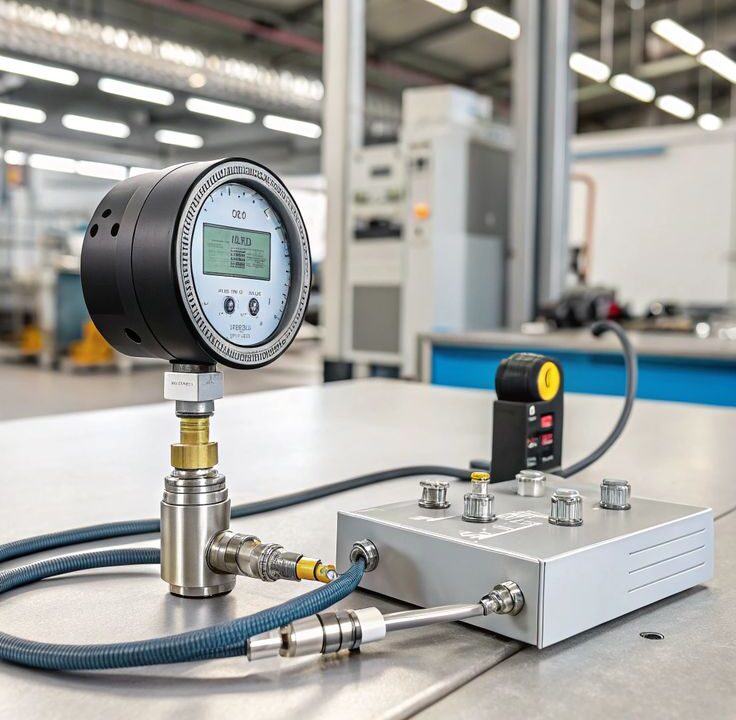
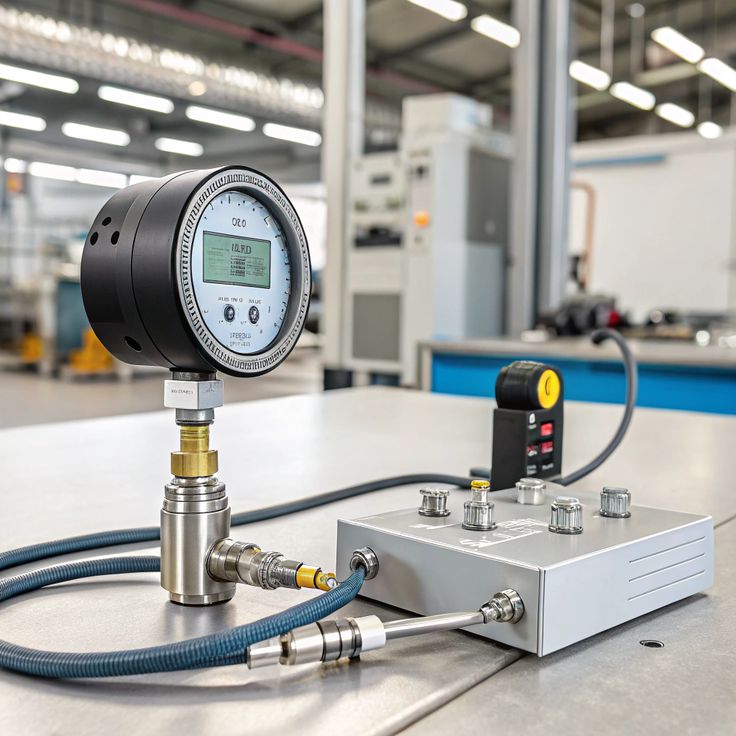
The measurement system uses an absolute pressure transducer that compares internal pressure against a complete vacuum reference. If pressure drops beyond your acceptable threshold, you’ve identified a leak. This method works reliably for many applications, particularly when you’re testing medium-sized components at modest pressures, typically around 10 sccm (standard cubic centimeters per minute) at 10 psi.
How Absolute Pressure Decay Works
Here’s the step-by-step process for absolute pressure decay testing:
- Pressurize the test component to the specified target pressure
- Close the fill valve to isolate the pressurized volume
- Allow a stabilization period for thermal effects to dissipate
- Monitor pressure decay over the measurement period
- Compare measured decay against pass/fail criteria
The challenge? Temperature fluctuations during pressurization can affect accuracy. When you rapidly introduce compressed air into a component, the gas heats up. As it cools back to ambient temperature, pressure naturally drops, and this thermal effect has nothing to do with actual leaks.
For applications where you don’t need extreme precision or lightning-fast cycle times, absolute pressure decay gets the job done. It’s simpler to set up, requires less sophisticated equipment, and provides acceptable results for many hydrostatic and pressure testing scenarios.
Differential Pressure Decay: A More Sensitive Alternative
Differential pressure (DP) decay testing takes a different approach. Instead of measuring pressure against absolute vacuum, it compares your test component against a reference volume with known zero-leak characteristics.
Both the test part and reference volume get pressurized simultaneously to the same target pressure. After isolation, a differential pressure transducer measures the pressure difference between them. Since both volumes experience identical thermal conditions, temperature effects cancel out, leaving only actual leak-related pressure loss visible in your measurements.
The DP Decay Testing Process
Differential pressure decay testing follows these steps:
- Pressurize both test component and reference volume to target pressure
- Close fill valves on both sides
- Allow brief stabilization across both volumes
- Seal reference volume isolation valves
- Open exhaust valve to isolate differential transducer
- Measure pressure variation between test and reference volumes
- Evaluate against acceptance criteria
The beauty of this method? It reaches stability faster because thermal effects impact both sides equally. Combined with high-resolution 24-bit analog-to-digital circuits and narrow-range differential transducers, DP decay systems achieve exceptionally precise measurements.
Key Differences: Sensitivity and Resolution
The most significant advantage of differential pressure decay is measurement resolution. Think of it like comparing standard definition to high definition, both show you the image, but one reveals far more detail.
Absolute pressure transducers measure against the entire pressure range from vacuum to test pressure. A differential transducer only measures the small difference between test and reference volumes. This narrow measurement range translates directly to higher sensitivity.
Practically speaking, this means:
- Tighter repeatability: Measurements cluster more closely together on repeated tests
- Faster defect detection: Smaller leaks become visible sooner in the test cycle
- Improved Gage R&R: Reduced measurement system variation improves statistical process control
- Clearer pass/fail distinction: Less overlap between acceptable and defective parts
For manufacturers dealing with stringent burst testing requirements or pursuing CRN certification, this enhanced precision can be the difference between first-time approval and costly rework cycles.
When to Choose Each Method
So which testing method should you choose? The answer depends on your specific application requirements, part characteristics, and quality objectives.
Absolute Pressure Decay Works Best For:
- Medium-sized components at moderate test pressures (10-30 psig)
- Leak rate specifications around 10 sccm or higher
- Applications where current cycle times meet production needs
- Budget-conscious testing where simpler equipment reduces capital costs
- Parts with relatively large leak specifications
Differential Pressure Decay Excels With:
- High-pressure testing: Above 30 psig where thermal effects become more pronounced
- Very tight leak specifications: Detecting leaks below 1 sccm (0.1-1 sccm range)
- Large non-expanding parts: EV batteries, drive systems, engine blocks, transmissions
- High-volume production: Where faster cycle times directly impact throughput
- Critical safety applications: Brake lines, hydraulic systems, fuel delivery components
Industries that consistently benefit from DP decay include automotive manufacturing, aerospace components, consumer electronics, medical devices, and any application involving pressure piping systems where failure consequences are severe.
Real-World Impact: Cycle Time and Quality Metrics
The measurement resolution advantage translates into tangible production benefits. Because differential pressure systems reach stable readings faster and with less noise, you can often reduce test cycle times significantly.
Consider a high-pressure fuel line testing scenario. With absolute pressure decay, you might need 30-45 seconds of stabilization time before measurement begins, plus another 15-20 seconds for the actual test. That’s nearly a minute per part.
A well-configured DP decay system might reach stability in 10-15 seconds with a 10-second test duration. On a production line testing hundreds or thousands of parts daily, these time savings multiply rapidly.
Quality metrics improve too. Tighter measurement repeatability means less ambiguity in borderline cases. You’ll see fewer false rejections of good parts and better detection of marginal defects that absolute methods might miss. For companies pursuing ASME code compliance, this improved discrimination supports robust quality systems.
Integration with Canadian CRN Requirements
If you’re manufacturing pressure equipment for the Canadian market, leak testing often plays a crucial role in demonstrating compliance with safety standards. The type of testing method you choose can affect both the thoroughness of your validation and the documentation you provide to regulatory authorities.
CRN registration typically requires comprehensive testing data showing that your equipment meets applicable ASME or CSA code requirements. More precise testing methods generate clearer, more defensible documentation.
Provincial regulators across Canada, from New Brunswick CRN certification to other jurisdictions, appreciate testing protocols that demonstrate robust quality control. When you can show consistent, repeatable leak test results with minimal measurement uncertainty, you build confidence in your entire validation package.
This becomes particularly important for equipment operating at higher pressures or in critical applications where failure consequences extend beyond property damage to potential safety risks.
Making the Right Choice for Your Application
There’s no universally “better” method, only the right method for your specific situation. Start by evaluating:
- What leak rate specifications must you meet?
- What test pressures will you use?
- How critical is cycle time to your production throughput?
- What’s the failure cost if a defective part reaches service?
- What regulatory documentation standards apply?
For many manufacturers, absolute pressure decay provides adequate performance at lower equipment costs. It’s proven, reliable, and widely understood. If you’re testing at moderate pressures with reasonable leak specifications and current cycle times work for your production volumes, there’s no compelling reason to change.
But if you’re pushing boundaries, tighter specifications, higher pressures, faster production demands, or critical safety applications, differential pressure decay delivers measurable advantages. The higher upfront equipment cost often pays back through improved yields, faster throughput, and reduced quality escapes.
Expert Testing Support from Titan Research Group
Choosing the right leak testing method is just one piece of bringing pressure equipment to market successfully in Canada. You also need to navigate provincial regulations, generate code-compliant documentation, and validate designs against ASME Section VIII testing requirements.
Titan Research Group specializes in comprehensive testing services that support CRN registration across all Canadian provinces. Our burst testing capabilities complement leak testing to provide complete validation of pressure equipment integrity.
Whether you’re working with pressure vessels, piping systems, or specialized components for industries requiring CRN compliance, our engineering team helps you select appropriate testing protocols, execute tests to code standards, and generate audit-ready documentation that supports smooth regulatory approval.
We understand that testing isn’t just about passing a single requirement, it’s about building a defensible quality system that gives you confidence in your products and provides regulators with clear evidence of compliance. From initial design review through final CRN application, we’re here to guide manufacturers through every step of the approval process.
Get the Testing Right the First Time
Leak testing may seem like a straightforward pass/fail check, but the method you choose affects measurement quality, production efficiency, and regulatory confidence. Understanding the strengths and limitations of absolute versus differential pressure decay helps you make informed decisions that align with your quality objectives and business requirements.
If you’re evaluating testing options for new equipment or looking to improve your current validation processes, contact Titan Research Group today. Our testing specialists can assess your specific application, recommend appropriate methods, and provide comprehensive testing services that support your path to CRN certification and market success across Canada.
Don’t leave critical testing decisions to chance. Partner with experts who understand both the technical requirements and the regulatory environment. Let’s discuss how the right testing approach can accelerate your approvals, improve your quality metrics, and support your long-term business objectives.