
Listed vs. Unlisted Components in ASME B31.3: What’s the Difference?
August 15, 2025
What Is Burst Testing and Why Is It Important for Your Products?
September 10, 2025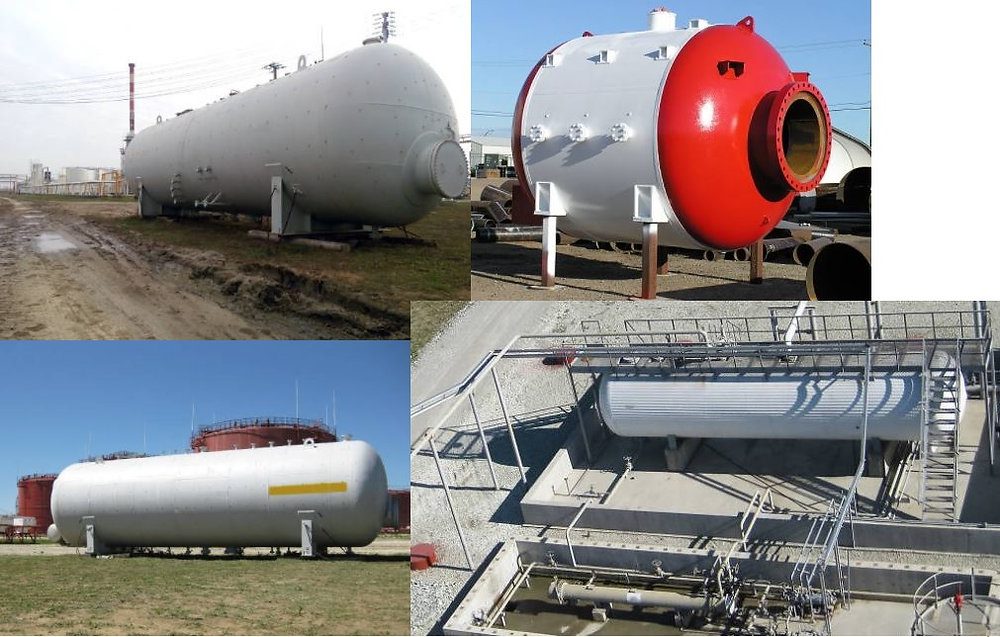
If you manufacture, import, or supply pressure equipment in Canada, you’ve likely heard of the Canadian Registration Number (CRN). Without it, boilers, pressure vessels, fittings, and piping systems cannot legally be installed or operated above 15 psi with some exemptions.
But how do you actually obtain a CRN? This guide breaks down the CRN application process step-by-step, so you can navigate it efficiently and avoid costly delays.
Step 1: Determine if Your Equipment Requires a CRN
Before applying, confirm whether your product falls under Canadian pressure equipment regulations. A CRN is generally required for:
- Pressure vessels (tanks, heat exchangers, autoclaves, etc.)
- Boilers
- Fittings such as valves, flanges, couplings, and hoses
- Piping systems subject to ASME B31.3 or CSA B51
⚠️ Even small components like safety valves or connectors would need a CRN if they are part of a registered assembly.
Step 2: Prepare Design Documentation
Safety authorities require detailed documentation to demonstrate compliance with CSA B51 and applicable ASME codes(e.g., Section VIII, B31.3). Typical submission packages include:
- Design calculations (thickness, stress, UG-37 reinforcement, etc.)
- Material specifications (ASME or ASTM listed materials)
- Drawings and dimensions
- Proof test results (burst, hydrostatic, or cycle testing) for unlisted components
- Quality system certificates (such as ISO 9001)
The completeness of your documentation directly affects review timelines.
Step 3: Apply to a Provincial or Territorial Safety Authority
Canada does not have a single national CRN office. Instead, each province and territory issues CRNs through its own safety authority:
- ABSA (Alberta)
- TSSA (Ontario)
- TSBC (British Columbia)
- RBQ (Québec)
- and others
Your application is reviewed by professional engineers at the authority. They verify that your design complies with CSA B51 and relevant ASME standards.
Step 4: Multi-Provincial Registration (Optional but Common)
A CRN issued in one province can often be used to apply for registration in others. Some authorities coordinate through reciprocal agreements, but the process is not fully harmonized.
For manufacturers selling across Canada, multi-jurisdictional registration is essential. Services like ApprovalWise.com streamline this process, tracking expiry dates and simplifying submissions.
Step 5: Receive Your CRN Number
If your design passes review, you’ll receive a Canadian Registration Number. The number is unique and indicates the province of issuance.
For example:
- 0H12345.5 = A CRN issued in Ontario (H), with the digit at the end (.5) showing the province/territory extension.
Once issued, your CRN must be stamped or documented on all nameplates, drawings, and technical files (where it fits).
Step 6: Maintain Compliance
A CRN is not a one-time requirement. Safety authorities may require:
- Renewals after a set number of years (10 years for fittings)
- Revisions if pressure boundary design, materials, or manufacturing processes change
- Periodic audits or inspections to ensure ongoing compliance
Failure to maintain compliance can result in cancellation of the CRN.
Tips for a Smooth CRN Application
- Start early – review times can range from weeks to months to years
- Engage experienced engineers who understand CSA B51 and ASME codes such as Titan Research Group
- Use listed materials and components where possible, to reduce additional testing requirements, although unlisted materials and components are also acceptable with justification.
- Centralize your CRN records to avoid missed renewals or expired approvals using tools such as Approvalwise.com.
- Note that Canada exclusively regulates ASME and API code so don’t think that because you are certified in Europe you can sell to Canada (for example).
Final Thoughts
Obtaining a CRN in Canada can be a complex process, but it’s essential for legal compliance, market access, and public safety. By following a structured approach—identifying requirements, preparing complete documentation, and applying through the right authorities—you can avoid costly delays and ensure your pressure equipment is accepted across Canada.
For organizations managing multiple products and jurisdictions, tools like Approval Wise provide a powerful way to track, manage, and streamline CRN approvals.